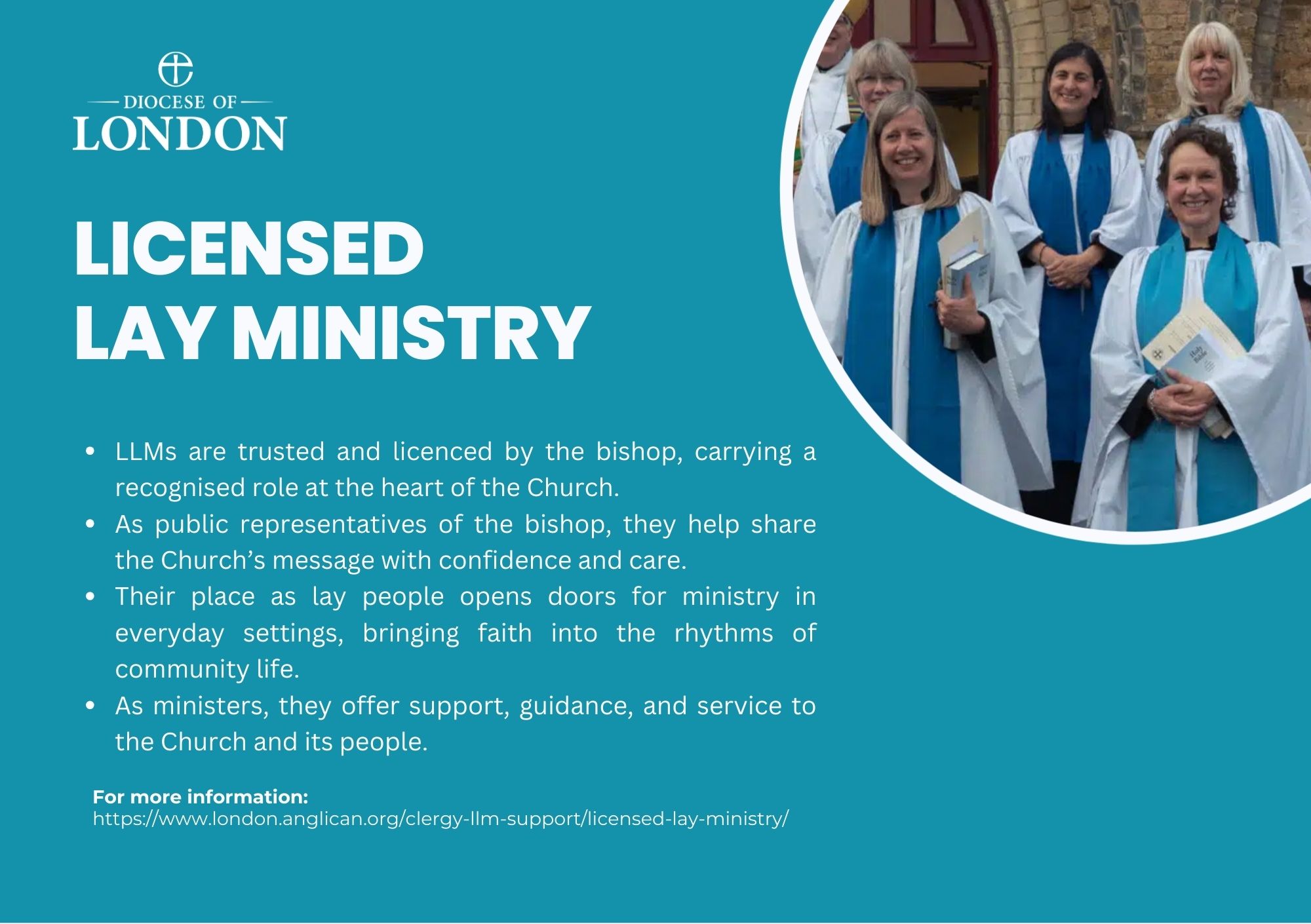
Following on from our New Year Deanery Chapters, we want to reiterate Licensed Lay Ministry as a way to strengthen mission and pastoral presence both inside and beyond traditional parish life. Licensed Lay Ministers (LLMs) are laypeople who receive formal authorisation from the Bishop, taking on recognised responsibilities while remaining accountable through diocesan structures.
According to Diocesan guidance, being licensed makes LLMs public representatives of the Bishop and the wider Church, entrusted to serve congregations and communities with confidence and care. As lay people, LLMs are often well placed to bring faith into everyday settings.
Licensed Lay Ministry is wide ranging and can teach and support people of all ages in growing in faith, preaching and leading worship, and providing pastoral care. Practical responsibilities can include taking Holy Communion to those who are housebound and conducting funerals, alongside community engagement and outreach activities.
LLMs serve across many contexts, including parishes, hospitals, schools, prisons, workplaces, and within families and local communities. Each LLM is typically licensed to a particular place (usually a parish) where they work collaboratively with the incumbent and other lay leaders.
For those considering the role, the Diocese frames discernment as a shared, prayerful process that takes time. Potential candidates are encouraged to reflect on whether they sense a call to ministry, are willing to step beyond the familiar, can work as part of a team, and want to connect God’s word with what is happening in society.
Training includes theological study, formation and preparation for ministry, and the Diocese stresses that no one should be excluded on grounds of cost. Candidates and sponsoring parishes are encouraged to contribute where they can, with costs shared to widen access. The first step is to talk with a vicar or chaplain about what comes next.
Below are some useful documents on Licensed Lay Ministry: